- Loctaion: Portsmouth VA
- Call Us: (757)-797-6128
- Mail: info@bnfjunkremoval.com
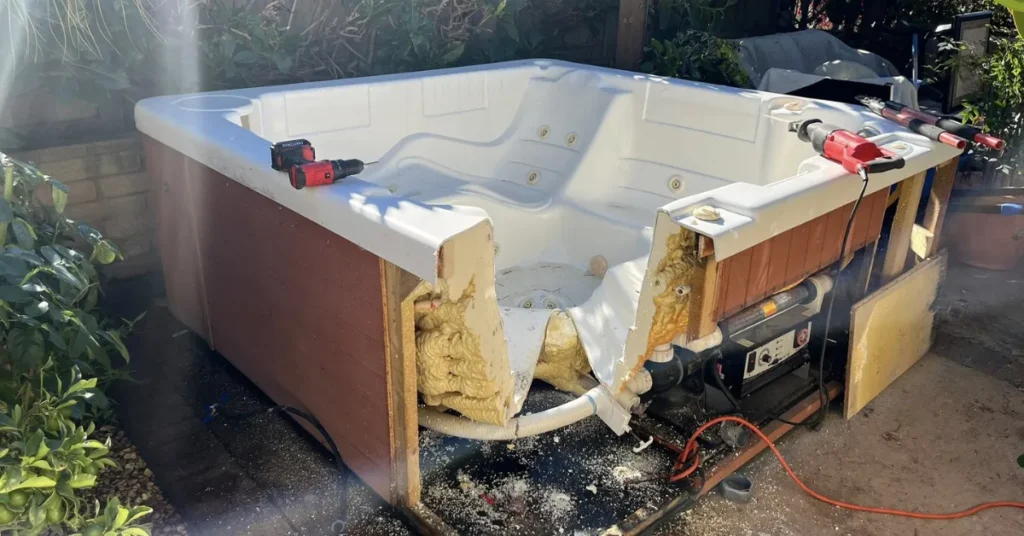
The best way to get rid of a hot tub is to match the disposal method to the spa’s condition. A working, portable unit may be sold, donated, traded in, or relocated.
A damaged or built-in hot tub usually needs to be drained correctly, disconnected from utilities, dismantled, loaded, and taken to approved disposal or recycling facilities. If the unit is hardwired, surrounded by decking, set into the ground, or difficult to reach, professional hot tub removal is usually the safer and simpler option.
Do not place an intact hot tub at the curb or take it to a dump without checking acceptance rules first. Municipal collection limits, transfer-station policies, chemical-disposal requirements, and preparation rules vary by city.
If the hot tub works, test it before listing it. Clean it, photograph the shell and equipment area, record the make and model, and disclose leaks, damaged controls, missing covers, or other problems. Include the approximate dimensions and explain whether the buyer must disconnect and remove it.
Selling is most realistic when the spa is accessible and can be transported intact. A free listing may attract more interest than a high asking price because the buyer still has to pay for lifting, transport, foundation preparation, electrical work, and installation.
Never allow an unqualified buyer to disconnect hardwired equipment or damage your deck, fence, or landscaping during pickup. Agree in writing on who is responsible for disconnection, property damage, lifting equipment, and cleanup.
A donation only works when an organization has confirmed that it accepts used hot tubs and has a safe way to collect one. Do not leave a spa at a donation center without permission.
If you are buying a replacement, ask the dealer whether it offers removal, a trade-in credit, or coordinated pickup. Compare the full cost—not just the credit—with a separate removal quote.
Find out whether the dealer removes the old unit before or after the new one arrives and whether deck or electrical work is excluded.
Relocation makes sense when the spa is structurally sound and you want to move it elsewhere on the property, take it to a new home, or transfer it to another owner intact.
A hot tub mover focuses on preserving the unit; a disposal crew may instead cut an unwanted spa into sections.
Before scheduling a move, confirm:
Relocation and disposal are different services, so use a company equipped for the outcome you want.
A professional junk removal or demolition company is often the most practical choice for a broken, outdated, built-in, or inaccessible hot tub.
Depending on the agreed scope, the crew may dismantle the cabinet and shell, separate eligible materials, carry the pieces out, load them, haul them to approved facilities, and clean loose debris from the work area.
Ask whether the quote includes:
– labor and dismantling;
– hauling and disposal fees;
– hot tub cover, steps, and accessories;
– deck, gazebo, concrete, or enclosure removal;
– electrical, plumbing, or gas disconnection;
– removal of stored spa chemicals;
– recycling of accepted components; and
– final sweeping or debris cleanup.
An estimate that says only “hot tub removal” can mean different things to different companies. A clear scope protects both the homeowner and the crew.
Some cities accept hot tubs through scheduled bulky or special collection, but the rules are highly local.
The program may require the unit to be drained, disconnected, dismantled, or placed at an approved collection point.
Size or volume limits may apply, and city crews generally do not enter a backyard to perform demolition.
Call or check the city’s current waste guide before doing any cutting. Ask these exact questions:
If the city accepts only a prepared curbside pile, you still need a safe plan to disconnect, dismantle, and move the spa from its current location.
DIY hot tub removal can reduce labor expense, but it does not eliminate disposal fees, vehicle needs, heavy lifting, or safety risks.
It is best limited to people who understand the installation, have capable helpers, own suitable tools and protective equipment, and have confirmed where every material will go.
At a high level, the work involves:
Cutting fiberglass or acrylic can create sharp edges and airborne dust. Use task-appropriate eye, hand, hearing, respiratory, and skin protection, control dust, and keep children and pets away.
Do not begin demolition until the electrical supply has been safely disconnected and verified. If the hot tub is hardwired, connected to gas, structurally integrated into a deck, or set in concrete, bring in the appropriate licensed professional.
A hot tub may be partly recyclable, but it is rarely accepted as one intact recyclable item. Scrap-metal facilities may accept frames, motors, heaters, and other metal after preparation.
Some electronics programs may accept controls or circuit components. Clean wood may have a separate route. Acceptance of acrylic, fiberglass, PVC, foam, treated wood, and composite panels varies widely.
Before transporting anything, ask each facility:
– which materials it accepts;
– whether components must be clean or separated;
– whether motors, wiring, or electronics require a different drop-off;
– whether there is a minimum or maximum load;
– whether proof of residency is required; and
– what fees apply.
“Eco-friendly hot tub disposal” should mean recovering the materials local facilities can actually process and disposing of the remainder through approved channels. It should not mean assuming every component is recyclable.
For more practical waste-reduction ideas, see B&F’s guide to avoiding waste through upcycling and recycling.
Preparation depends on the company and local rules. Ask your removal provider what it wants you to do before the appointment; some crews include more preparation than others.
1. Decide Whether the Spa Must Stay Intact
Do not dismantle a hot tub that you plan to sell, donate, trade in, or relocate. Confirm the removal path and transport method first.
2. Check Permits and Utility Requirements
Contact the local permit office when the spa is built in, recessed into a deck, connected to gas or permanent plumbing, or when removal will alter a permitted structure.
A licensed electrician should handle hardwired electrical disconnection when required. Use a plumber or gas professional for connections that fall within their trade.
3. Drain the Water Legally
Do not automatically pump treated water into the street, gutter, storm drain, ditch, or a neighbor’s yard. Hampton Roads guidance says local ordinances vary and recommends allowing chlorine to dissipate, verifying chlorine or bromine below 0.1 milligrams per liter, keeping pH between 6.5 and 8.5, and routing suitable water to a grassy area rather than a nearby storm drain.
Saltwater and water containing other chemicals may require a different route.
Check the City of Chesapeake’s Hampton Roads pool and spa discharge guidance and confirm the current rule with your own city before draining.
Do not pour unused hot tub chemicals into the spa before draining or place chemical containers inside the empty unit for hauling. Household hazardous-waste programs commonly handle these products separately.
4. Make the Electrical Condition Clear
Tell the removal company whether the unit is plug-in or hardwired and whether a qualified person has disconnected it. Turning off a control panel is not the same as safely disconnecting a permanent electrical supply.
5. Clear the Access Route
Move furniture, planters, grills, hoses, toys, and loose items. Unlock gates, manage pets, identify septic components or irrigation lines, and point out fragile landscaping. Do not remove a fence or deck section until the removal method is confirmed.
6. Separate Chemicals and Personal Items
Remove chemical bottles, filters, towels, toys, glass, and anything stored in or around the cabinet. Ask where each chemical should go; do not mix products.
7. Confirm the Finish Scope
After removal, the site may still have a concrete pad, electrical stub, plumbing, deck opening, disturbed soil, or landscaping work. Decide who will make the area safe and ready for its next use.
Before hiring a company, ask:
What is the cheapest way to get rid of a hot tub?
If the hot tub works and is easy to move, selling it or giving it away to a qualified recipient may have the lowest direct cost. Municipal bulky pickup can also be economical when the city accepts the prepared unit. Compare the full expense, including safe disconnection, dismantling, tools, helpers, transport, disposal fees, and cleanup.
Can I take a hot tub to the dump?
Possibly, but call first. Some landfills or transfer stations accept an intact hot tub; others require it to be dismantled or separated by material. Ask about residency, vehicle, weight, material, and fee restrictions. Never arrive with hot tub water or unsecured chemicals inside the load.
Can you cut up a hot tub to get rid of it?
Many unwanted hot tubs can be dismantled and the shell cut into manageable sections after the water is drained and all utilities are safely disconnected.
The work can produce sharp edges and fiberglass or plastic dust, so it requires appropriate tools, protection, containment, helpers, and a confirmed disposal route.
Built-in, hardwired, gas-connected, or structurally integrated spas are better handled by qualified professionals.
Can a hot tub be recycled?
Parts of it often can. Metal frames, motors, wiring, heaters, and some electronics may have recycling routes. Acceptance of acrylic, fiberglass, PVC, foam, treated wood, and composite panels varies.
Contact facilities before dismantling and do not claim an entire spa is recyclable unless a facility has agreed to accept it.
Can junk removal companies take hot tubs?
Yes, many junk removal companies provide hot tub demolition and hauling. Confirm whether the company removes the spa from its installed location or only takes a drained, disconnected, curb-ready unit. Ask what the quote includes and whether utilities, decking, concrete, chemicals, and cleanup are separate.
How long does hot tub removal take?
A simple freestanding spa with open access may be removed in a few hours, while a built-in unit, tight access, deck demolition, or utility work can extend the project.
Scheduling and disposal logistics also matter. A company can estimate the time more accurately after reviewing photos and the site.
Can old hot tub water be used to water plants?
Do not use it on plants without checking its chemistry and local rules. Chlorine, bromine, salt, algaecides, cleaning products, and pH can harm vegetation or waterways.
Hampton Roads guidance recommends specific dechlorination and pH conditions for suitable discharges and warns that saltwater may brown lawns. Verify with your city before draining.
Should I remove a hot tub before selling my house?
Remove it when it is broken, unsafe, visibly deteriorated, or likely to become an objection during inspection or negotiation. A working, maintained spa may be an asset to some buyers and a maintenance concern to others.
Ask your real estate agent whether repair, removal, or documented transfer is most appropriate for the local market and your sale timeline.