- Loctaion: Portsmouth VA
- Call Us: (757)-797-6128
- Mail: info@bnfjunkremoval.com
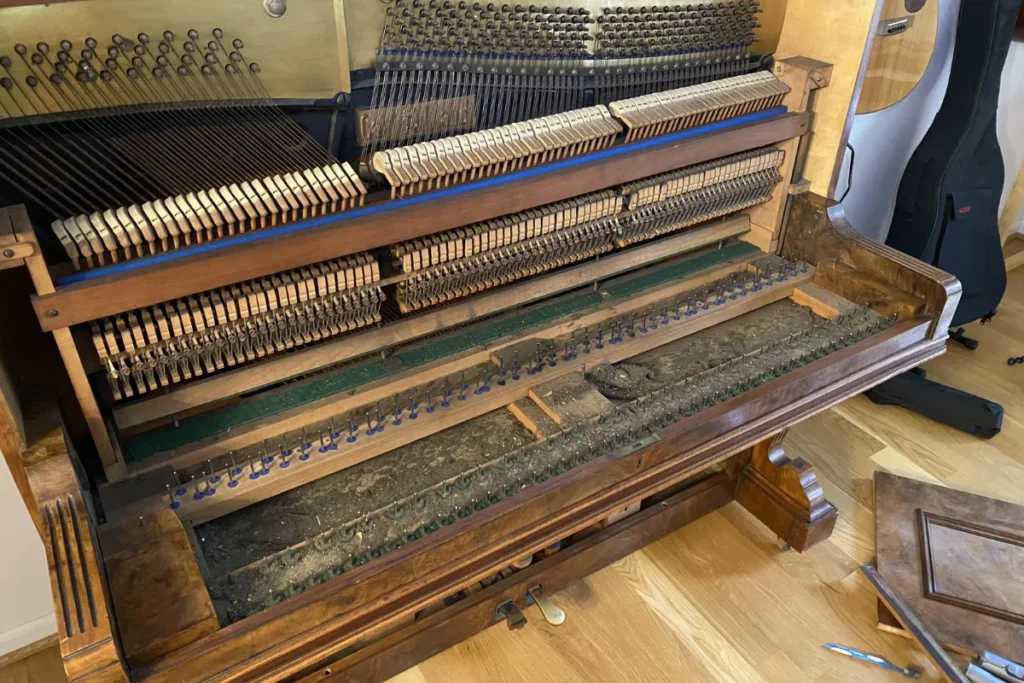
Getting rid of a piano usually comes down to seven choices: sell or trade it, give it away, donate it, repurpose it, recycle usable materials, use an approved local bulk-disposal option, or hire a professional piano removal company.
The right choice depends on four things: the piano’s condition, realistic value, route out of the property, and your deadline.
If the piano plays well and has been maintained, begin with a dealer, technician, buyer, or donation program.
If it is broken, water-damaged, moldy, incomplete, or no organization will accept it, professional removal is often the most practical next step.
Selling is worth testing when the piano is playable, structurally sound, and made by a brand with an active used market. Contact local piano dealers before relying on online asking prices. A dealer can tell you whether the model is suitable for trade-in, consignment, direct purchase, or professional appraisal.
For a private listing, include the brand, model, serial number, approximate age, dimensions, condition, service history, location, stairs, pickup deadline, and several photos. State clearly whether the buyer must arrange a qualified mover.
Avoid promising that a piano is “in perfect condition” unless it has been properly assessed. Be honest about sticking keys, tuning problems, water exposure, cosmetic damage, and access. Accurate details reduce wasted messages and last-minute cancellations.
Giving a piano away can be the easiest no-sale option when it is playable but has limited resale value. Post it in local community groups, neighborhood apps, school or church networks, musician groups, and reputable online marketplaces.
Use “free piano—recipient arranges professional pickup” only if that is genuinely your arrangement. Decide in advance whether you will contribute toward moving costs. Set a reasonable response deadline so the giveaway does not delay a move, closing, renovation, or rental turnover.
A useful listing includes:
– Type, brand, model, and serial number
– Approximate age and last tuning date
– Honest description of how it plays
– Photos and a short playing video
– Piano dimensions
– Floor level, stair count, turns, and door width
– Pickup location and deadline
– Who is responsible for moving and insurance
Never allow an unprepared person to drag the piano across floors or attempt stairs without appropriate equipment and experience. A free piano is not worth an injury or serious damage to the property.
A clean, playable piano may be useful to a school, church, community center, nonprofit music program, theater, senior-living community, or family-support organization. Ask first; do not deliver a piano without written acceptance. A recipient needs space, a suitable environment, a moving plan, and funds for tuning and maintenance.
You can also submit the piano to specialist programs. The Beethoven Foundation donation form asks for the piano type, brand, and location. Pianos for Education says accepted donations are routed for pickup, but the schedule may take weeks depending on routing. These are possible pathways, not guarantees that every piano or location will qualify.
If the instrument is no longer playable but the cabinet has sentimental or decorative value, repurposing may preserve part of it. Old piano cases have been converted into bookshelves, desks, bars, display cabinets, garden features, and art pieces. Keys and wood panels may also be reused in smaller projects.
Repurposing is appropriate only when you want the finished object and have a safe plan. An acoustic piano contains heavy internal components and tensioned strings. Do not begin by cutting strings, smashing the case, or tipping the piano. Ask a piano technician, experienced craftsperson, or removal professional to make the instrument safe before major dismantling.
For more ideas about keeping materials in use, see B&F Junk Removal’s guide to avoiding waste through upcycling and recycling.
Pianos contain a mixture of wood, steel wire, a cast-metal plate, felt, hardware, and other materials.
That does not mean a recycling center will accept an intact piano or that the scrap value will cover the labor required to separate it.
Before moving or dismantling anything, contact local recycling and scrap facilities. Ask:
– Do you accept complete pianos or only separated materials?
– Must metal be free of wood, felt, wire, or other attachments?
– Are there minimum quantities or preparation rules?
– Is there a drop-off fee?
– Do you provide pickup?
– What identification or residency documents are required?
Scrapping a piano is rarely a simple money-making project. Transport, labor, tools, safety equipment, and facility rules can cost more than the recoverable material is worth. If recycling is your priority, ask a removal company what materials can realistically be separated under local conditions.
Some municipal programs or transfer stations accept unusually large household items; others exclude pianos, require appointments, impose size or weight limits, or direct residents to private haulers. Rules can also differ between curbside collection and self-haul facilities.
Contact the city or county waste department and ask specifically about an acoustic piano. Confirm:
– Whether the piano is accepted
– Whether collection must be scheduled
– Where it must be placed
– Whether it must be dismantled
– Size, weight, residency, and quantity limits
– Fees and payment methods
– Whether a private hauler is required
Do not leave a piano at the curb, in an alley, beside a dumpster, or at a donation center without permission. You could create a safety hazard, violate local rules, or become responsible for extra collection charges.
Professional piano removal is usually the most direct option when the piano is broken, rejected by donation programs, located on stairs, blocking a move or property sale, or subject to a firm deadline.
A suitable company should ask about the piano type, floor level, stair count, doorways, turns, surface conditions, parking, and final disposal plan before the job.
Pricing commonly depends on:
– Upright, console, spinet, baby grand, or grand design
– Piano dimensions and estimated weight
– Ground-floor, upstairs, basement, apartment, or commercial location
– Number and shape of stairs
– Narrow doors, landings, elevators, or tight turns
– Carry distance and truck access
– Labor, equipment, and disassembly needs
– Local donation, recycling, and disposal options
– Additional items included in the pickup
Ask whether labor, loading, transportation, disposal fees, and cleanup are included in the quote. Share clear photos before booking so the company can identify problems early.
For most acoustic pianos, DIY removal is a poor choice unless the people involved have piano-moving experience, appropriate equipment, a suitable vehicle, and a fully planned route.
Manufacturer specifications show that even common home pianos can weigh several hundred pounds. Casters are not designed for rolling a piano across every floor, threshold, or outdoor surface.
Do not dismantle an acoustic piano merely to make it lighter. Tensioned strings, the heavy plate, unstable components, sharp wire, and shifting weight create hazards. Professional dismantling may be appropriate for disposal, but it should be planned rather than improvised.
A portable digital keyboard is different. If it can be disconnected, separated from its stand, and lifted within the equipment manufacturer’s instructions, an owner may be able to transport it like other electronics. A digital console piano can still be bulky and may require help.
Once a recipient, mover, or removal company has confirmed the job:
Do not remove legs, lids, pedals, strings, or internal parts unless the professional handling the job specifically directs the preparation.
How can I get rid of my piano for free?
Offer a playable piano free to a qualified local recipient who agrees to arrange and pay for safe pickup. You can also apply to donation programs that provide pickup for accepted instruments. Free removal is not guaranteed because acceptance, service areas, condition standards, and scheduling vary.
How do I get rid of an unwanted piano quickly?
Send a piano removal company photos of the instrument, stairs, doorways, turns, and parking access, then request the earliest available quote. Selling or donating may take longer because you need a confirmed recipient and moving plan.
Will Goodwill come pick up a piano?
It depends on the regional Goodwill organization. Goodwill advises donors to check local acceptance rules. Some regional organizations reject pianos, while others use paid or third-party pickup partners that can route large items. Confirm acceptance, fees, and final destination before scheduling.
Will The Salvation Army accept a piano?
Possibly, but there is no nationwide guarantee. The Salvation Army says accepted items depend on local ordinances and need. Call the local center, provide complete piano and access details, and ask whether pickup is available and whether acceptance remains subject to inspection.
Why do people give pianos away for free?
The piano may have little resale demand while moving, tuning, repair, and maintenance costs remain substantial. Giving it away transfers those costs to the recipient, which can make even a free piano difficult to place.
Are old pianos worth anything in scrap?
Some parts contain recyclable metal, but an intact piano combines wood, wire, felt, hardware, and a heavy plate. Separation and transport can cost more than the material return. Ask a local facility what it accepts before dismantling or moving the piano.
Will a junk removal company take a piano?
Many do, but not every company accepts every piano or access situation. Confirm the type of piano, stairs, route, labor, disassembly needs, disposal plan, and what the quoted price includes.
Can I put a piano on the curb?
Only if your local waste authority has expressly approved it and you follow its scheduling and placement rules. Unapproved set-out can create a hazard and may lead to non-collection or fees.
Can I include other furniture in the same pickup?
Often, yes, if the removal company accepts the items and includes them in the quote. Make a complete item list in advance. B&F’s guide to getting rid of old furniture can help you sort donation, sale, recycling, and pickup options for the rest of the property.