How to Get Rid of Cardboard: 6 Practical Options
- Brian Turner
The best way to get rid of cardboard is to reuse sturdy boxes and recycle clean, flattened cardboard through an approved collection or drop-off program. If you have a large pile, limited transportation, or other junk to remove, professional pickup is another option. Suitable plain cardboard can also be composted.
Before choosing a method, look at the condition of the boxes, how much you have, and whether you can transport them. A few delivery cartons need a different plan than a garage full of moving boxes and appliance packaging.
Choose the Right Cardboard Disposal Option
| Option | Best for | What to check |
|---|---|---|
| Reuse at home | Best for Sturdy boxes you have a specific use for | What to check Condition and available storage space |
| Give away or sell | Best for Clean moving boxes someone else can use | What to check Whether the recipient will collect them |
| Curbside recycling | Best for Ordinary household quantities that fit your container | What to check Accepted materials and set-out rules |
| Recycling drop-off | Best for Extra cardboard you can transport | What to check Residency, load limits, and facility access |
| Home composting | Best for Small amounts of suitable plain cardboard | What to check Remove tape, glue, and other unsuitable materials |
| Professional pickup | Best for Large piles, bulky packaging, or mixed cleanouts | What to check Quote, access, accepted items, and recycling arrangements |
6 Ways to Get Rid of Cardboard Boxes
1. Reuse the Boxes You Still Need
Keep sturdy boxes for a planned move, shipping items, or organizing a dry storage area. If you recently bought an appliance or electronics, check the seller’s return requirements before discarding the original packaging.
Be selective. Set aside only the sizes you expect to use and flatten empty boxes for storage. Keeping every delivery box can turn a small reuse collection into another cleanup project.
Remove or cover old shipping labels before sending a box to someone else. Don’t pass along boxes that are dirty, musty, or damaged beyond useful repair.
2. Give Away or Sell Usable Moving Boxes
Offer clean boxes to friends, neighbors, or people preparing to move. For a larger group of matching moving boxes, you can also try a local sale listing. Giving them away may be the simpler choice if your priority is clearing space.
Include the approximate quantity, sizes, condition, and collection window in your listing. A photo helps people decide whether the boxes will work for them.
U-Haul’s box-sharing programs provide another reuse route. Check with the location before taking boxes there. Ask schools, charities, or community groups before dropping off packaging; don’t assume they need it.
3. Use Your Curbside Recycling Service
Curbside recycling is a practical choice when your program accepts cardboard and the flattened boxes fit inside the container. Empty the packaging first, then follow your provider’s instructions for sizing and placement. The EPA’s guide to common recyclables recommends flattening cardboard boxes before putting them in the bin.
Check the rules for your address instead of copying a neighbor’s setup. Apartment buildings may use a different collection provider from nearby single-family homes.
If the boxes will not fit, don’t assume a stack beside the cart will be collected. Use an approved overflow option or arrange a separate trip or pickup.
4. Take Extra Cardboard to a Recycling Drop-Off
A recycling drop-off can help when you have more cardboard than your container holds but can transport it yourself.
Before loading your vehicle, confirm:
- The facility accepts cardboard from your address.
- Your load qualifies as household or commercial material.
- Any quantity, vehicle, or trailer restrictions.
- Current opening hours and temporary closures.
- Whether a fee applies.
Keep cardboard separate from foam, plastic wrapping, and other waste. Bring it to the designated container rather than leaving it beside a full one. A business generating regular packaging waste should ask about an ongoing commercial recycling arrangement rather than assume a residential drop-off accepts its loads.
5. Compost Suitable Plain Cardboard
Plain cardboard can supply carbon-rich material, often called “browns,” to a home compost pile. The EPA lists shredded cardboard without wax coating, tape, or glue as suitable compost material. Mix it with appropriate food scraps and other compost ingredients, and maintain moisture and airflow. See the EPA’s home composting guidance.
Remove plastic labels and other attachments before tearing the cardboard into small pieces. Keep wax-coated, plastic-lined, and chemically contaminated packaging out of your home compost.
Use this method for quantities your compost system can handle. A large stack of intact boxes is not a quick substitute for a managed compost pile.
6. Arrange Professional Cardboard Removal
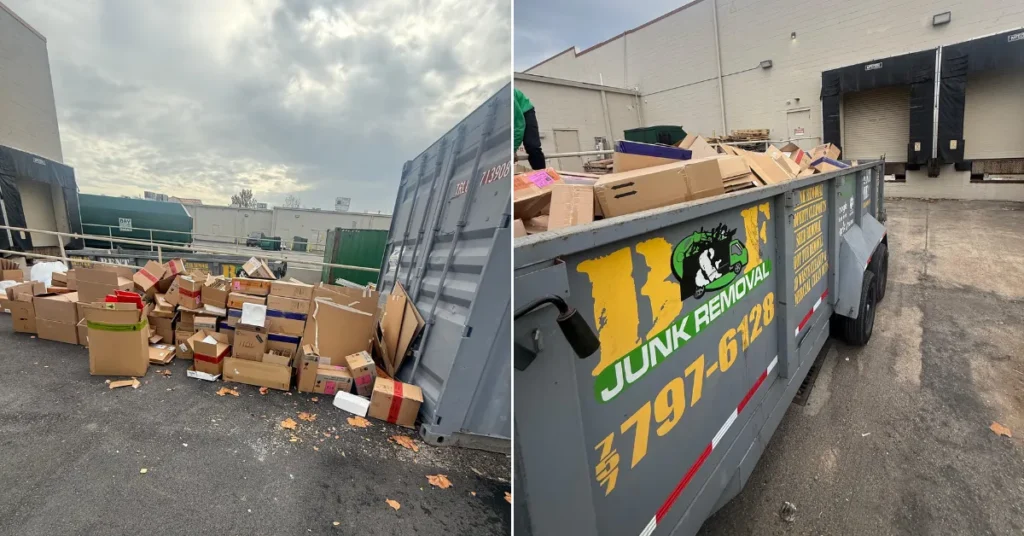
Professional pickup is worth considering when the load is too large to transport comfortably, access is difficult, or you need other unwanted items removed at the same time.
For example, a garage may contain empty boxes alongside old shelving and broken furniture. A garage or storage-unit cleanout can address the whole space rather than just the packaging.
For a workplace, B&F Junk Removal’s commercial junk removal service includes cardboard and packaging materials. Ask what preparation is needed, which other items can be included, and how recyclable cardboard will be handled.
Request a quote for the actual load. An estimate should account for what needs removing and the pickup conditions, not just an informal box count.
How to Prepare Cardboard for Recycling or Pickup
Preparing the pile makes it easier to store, load, and assess. Use these steps:
- Check inside every box. Remove products, paperwork, and anything you want to keep.
- Separate the packaging. Set aside foam inserts, plastic bags, bubble wrap, and packing straps for their own reuse or disposal route.
- Open the taped seams and flatten the boxes. If a cutter is needed, use a stable surface and cut away from your hands and body.
- Keep the cardboard dry. Store it under cover until collection or transport.
- Follow the destination’s instructions. Cut large panels to the accepted size; bundle them only if your collector requests it.
The EPA recommends flattening cardboard before recycling. Follow your collector’s preparation rules alongside the EPA’s general recycling guidance.
For paid pickup, ask the crew whether flattening is required before doing extra preparation. If packing materials or other junk are part of the load, describe them when requesting the quote.
How to Get Rid of Large Amounts of Cardboard
For a large pile, separate reusable boxes from recycling and other waste, then choose an approved drop-off or pickup route for the remaining load. Do not force everything into an overflowing cart.
If a move leaves you with usable moving boxes, torn cartons, and foam-filled appliance packaging, handle each group differently: offer the usable boxes for reuse, flatten the empty cartons, and separate the foam. You may clear part of the pile without paying for removal.
Before booking pickup, take a wide photo showing the whole pile and note any stairs, narrow access, or parking restrictions. Tell the company whether the boxes are empty and whether you want other items removed.
For recurring business waste, compare a regular cardboard collection arrangement with one-time hauling. The right choice depends on how often the packaging builds up and how much storage space is available.
Where to Recycle Cardboard in Hampton Roads
Use your own city’s instructions before setting out or transporting cardboard. Nearby cities can have different collection arrangements.
- Portsmouth: Start with Portsmouth Waste Management and confirm the correct route for extra cardboard. Do not assume instructions for refuse or bulk trash describe recycling collection.
- Norfolk: The city lists recycling drop-offs for Norfolk residents at 1176 Pineridge Road and 1188-A Lance Road. Check Norfolk’s recycling information before visiting.
- Virginia Beach: The city lists the recycling drop-off at 1989 Jake Sears Road and West Neck Recycling Center at 2500 West Neck Road. Its rules for blue-cart service require the lid to close and generally require recycling to remain inside the cart; a specific exception applies to certain 18-gallon townhome bins. See Virginia Beach recycling information.
For Chesapeake, Suffolk, Hampton, Newport News, and other nearby communities, use the askHRgreen Waste Wizard to find local guidance. Verify facility access and any residency or commercial-load restrictions before making a trip.
Cardboard Disposal Mistakes to Avoid
Burning boxes to make the pile disappear. The EPA lists cardboard among household materials that should not be burned because they can release harmful chemicals. Choose an appropriate reuse, recycling, or disposal route instead. See EPA wood-burning safety guidance.
Hiding other waste inside boxes. Packing foam, plastic film, and miscellaneous trash do not become cardboard recyclables just because they are inside a carton. Keep them separate.
Leaving cardboard beside a full container. Check the approved overflow process rather than assuming loose boxes will be collected. Don’t use a private business dumpster without permission.
Mixing suspect material into clean recycling. Set aside coated packaging until you confirm acceptance. If a box has chemical contamination, describe the substance to your waste department or hauler before arranging disposal.
Need Cardboard Removal in Hampton Roads?
If boxes are taking over your garage, storage room, or business, B&F Junk Removal can help you plan the cleanup. We serve Portsmouth and surrounding Hampton Roads communities, including Norfolk, Chesapeake, Virginia Beach, Suffolk, Hampton, and Newport News.
Tell us how much cardboard you have, where it is located, and whether other unwanted items need to go. We’ll confirm the pickup details and provide a quote before work begins.
Get a Free Quote or call (757) 797-6128.
Frequently Asked Questions
How can I get rid of cardboard boxes for free?
Try giving usable boxes to someone who will collect them. Your household recycling service or a resident drop-off may also accept cardboard without an additional per-load charge, but eligibility and fees vary. Free box sharing is different from hiring a company to load and haul the pile.
Do I need to remove tape and labels before recycling cardboard?
Usually, small amounts of tape and ordinary labels can remain, according to the American Forest & Paper Association. Follow your collector’s rules and remove separate packaging materials. For home composting, remove tape, plastic labels, and glue-bearing sections instead of leaving them in the pile.
Can wet cardboard be recycled?
Cardboard that became wet can still be recyclable once it dries, according to the American Forest & Paper Association. Keep otherwise clean, rain-damp boxes under cover to dry. Mold, food residue, or chemical contamination is a separate issue that should be checked with the receiving program.
Can I put cardboard in regular trash?
Check your local rules. Reuse or recycle accepted cardboard where practical. Nonhazardous cardboard rejected by your recycling program may need to go into regular trash, but that is not a blanket rule for all boxes. Ask the waste department about chemically contaminated packaging rather than mixing it into household waste.